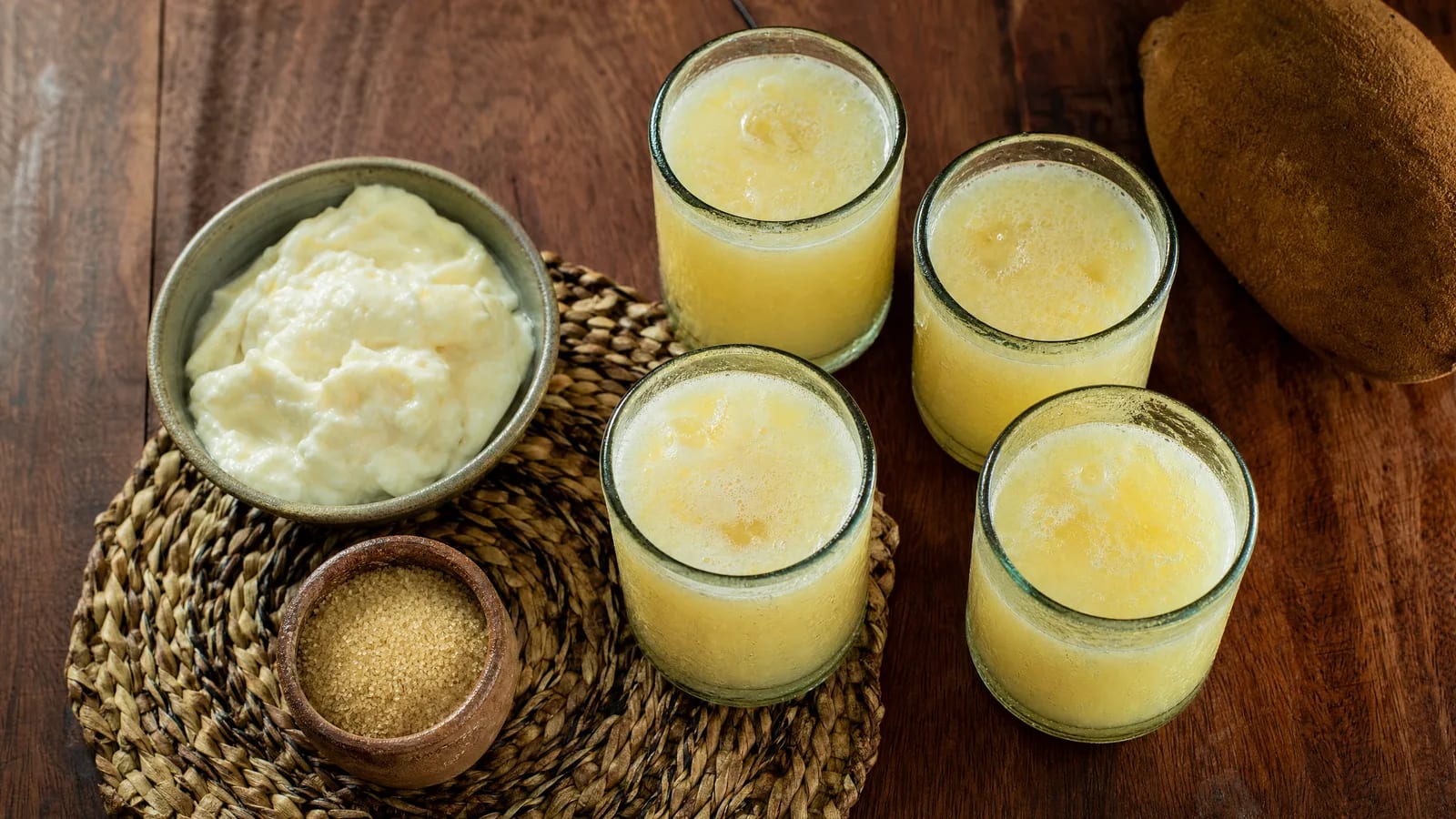
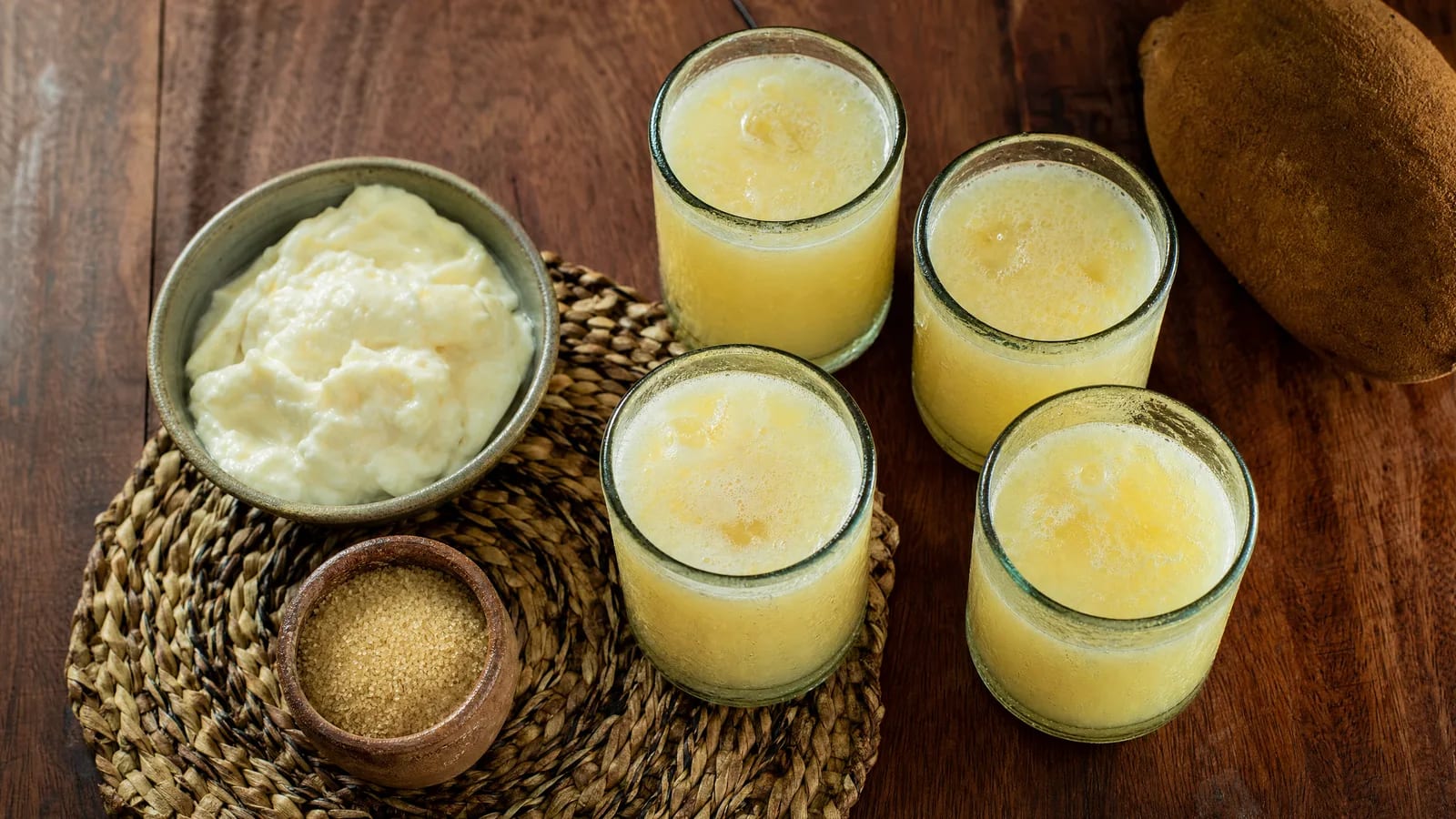
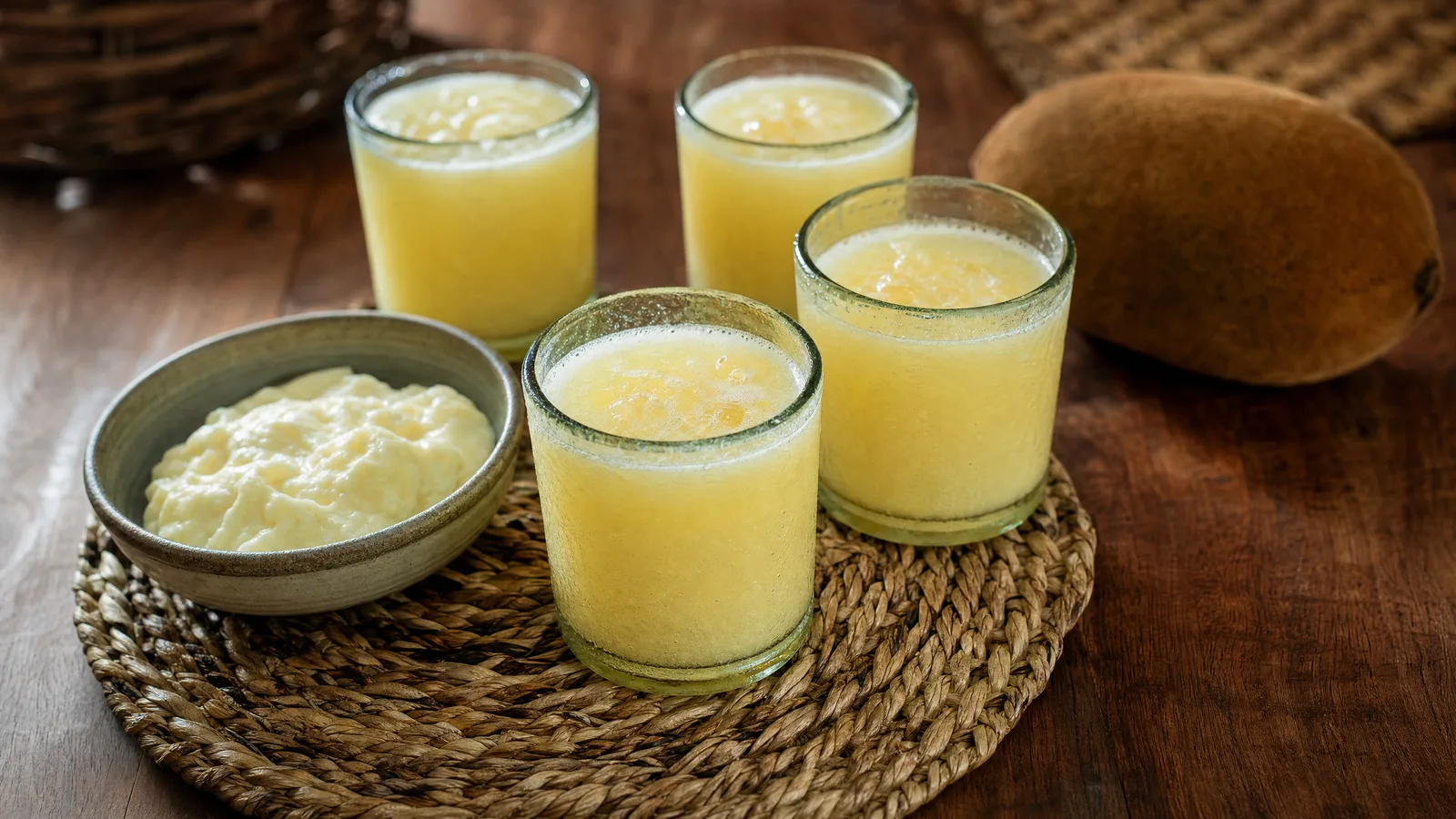
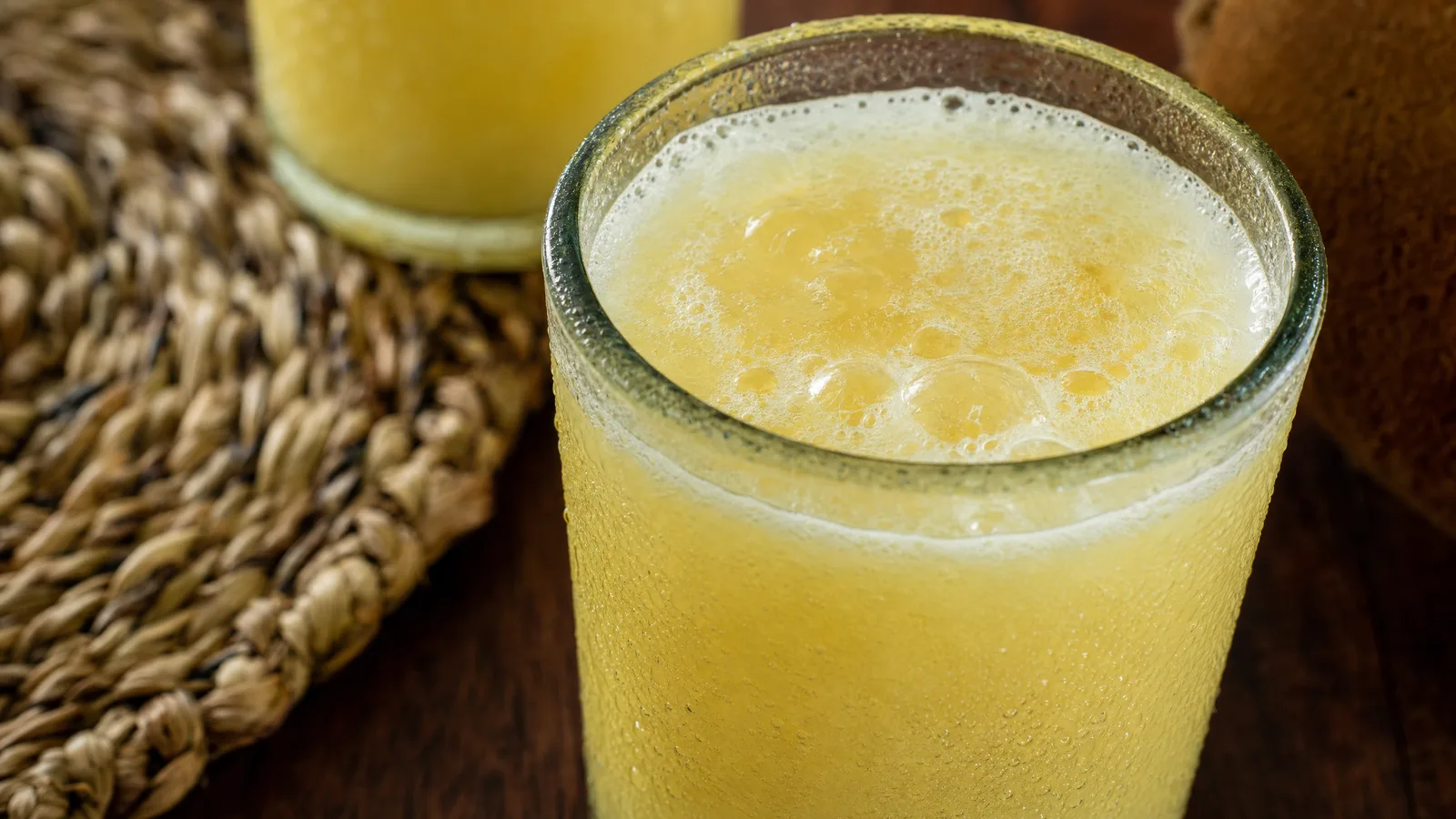
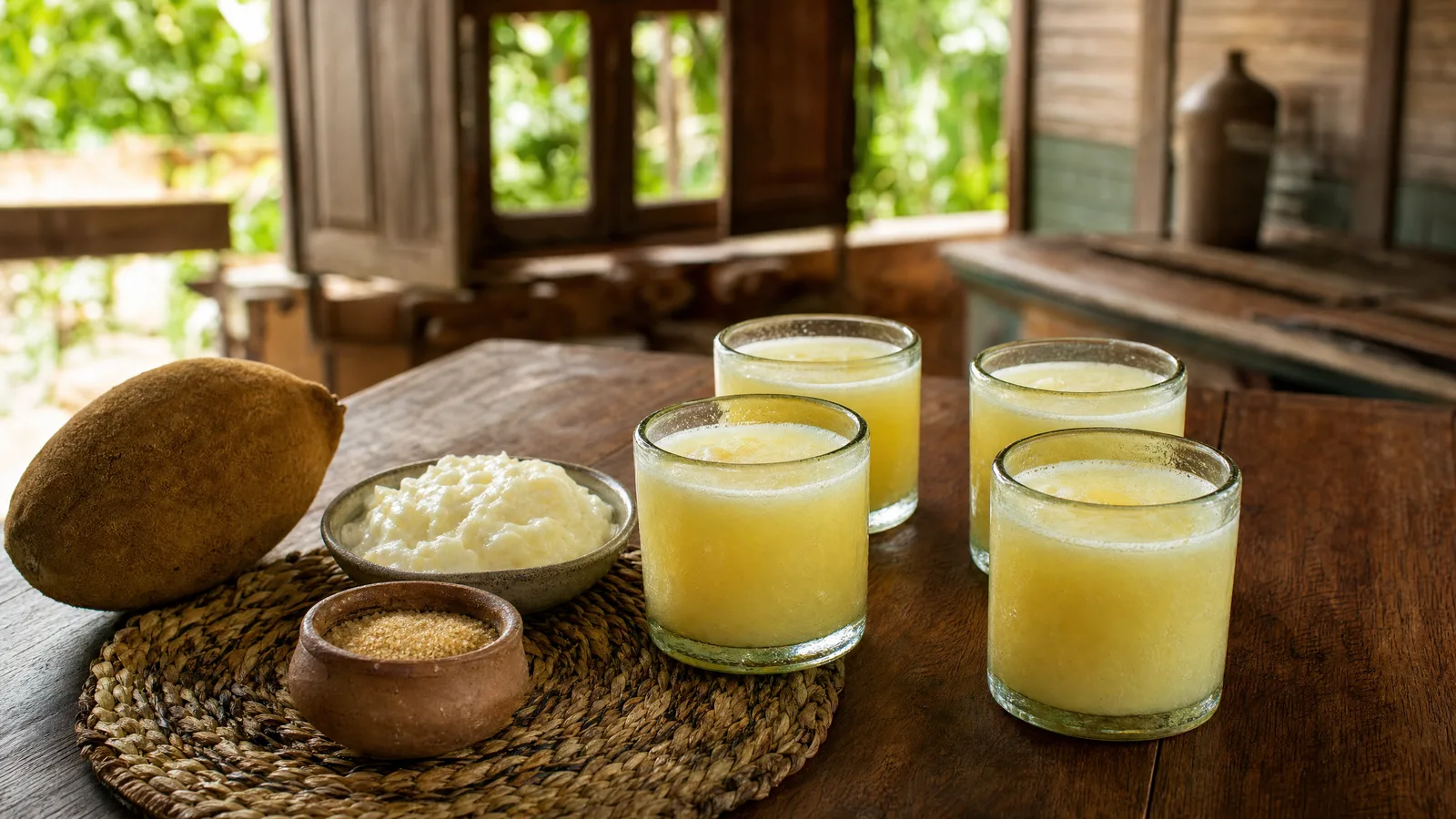
Made by blending cupuaçu—a creamy Amazonian fruit related to cacao—pulp with ice-cold water and just enough sugar to soften its acidity, this juice is an everyday presence on Amazonian tables and in snack bars. The fruit native to the Amazon gives the glass a pale yellow color, thickness, and perfume.
Behind the flavor
In Amazonas, cupuaçu turns what the forest offers into an everyday refreshment: it appears at market stalls, in home kitchens, and among the region's juices. Embrapa Amazônia Ocidental documented an analysis in Manaus of natural juice prepared from freshly pulped fruit; more than an occasional drink, it expresses the Amazonian intimacy with native fruits.
📜 Ingredients
- •cupuaçu pulp300 g (11 oz)🔁 unsweetened frozen cupuaçu pulp — It retains the characteristic flavor; thaw only enough to blend, without allowing the pulp to warm.
- •well-chilled filtered water700 ml (3 cups)
- •sugar2 level tablespoons, or to taste
👨🍳 Method
- 1
If the cupuaçu pulp is frozen, let it rest for 5 to 10 minutes, just until it loosens into pieces. Do not thaw it completely: the cold helps give the juice body.
If using fresh fruit, remove the white pulp surrounding the seeds and discard the seeds before measuring.
- 2
Place the cupuaçu pulp, well-chilled filtered water, and sugar in a blender. Blend for 45 seconds to 1 minute, until smooth, thick, and uniform.
Begin with the stated amount of sugar and taste; the drink's fragrant acidity is part of its character, so avoid oversweetening.
- 3
Serve immediately in chilled glasses. Drink without straining to preserve the pulp's texture; for a lighter drink, add up to 100 ml (scant 1/2 cup) of chilled water and blend for 10 seconds more.
On a riverside morning or a hot afternoon in Manaus, freshly blended juice calls for a simple table and lingering conversation.
🥃 Pairing
With cachaça
White/silver
Young, vegetal, and citrusy, served well chilled; choose cachaça from another state, as Amazonas has no cachaça-making tradition.
Its aromatic clarity and light body engage with cupuaçu's acidity without covering the fruit's perfume. Serve a small pour alongside the juice, never mixed into it.
Also pairs well with
✈️ A flavor worth the trip
Look for unsweetened cupuaçu pulp and first try the juice with less sugar. What may seem like intense acidity at first soon reveals a deep aroma, somewhere between fruit, flower, and cacao, that no ordinary fruit can reproduce.
💡 Quick tips
- •Use unsweetened pulp to control the balance between sweetness and acidity.
- •Avoid blending excessively once the drink is uniform, so it does not warm up.
- •For an even colder version, chill the glasses instead of adding ice, which dilutes cupuaçu's perfume.
- •The most common homemade variation adjusts the water: less water makes a fuller-bodied juice; more makes it lighter.
🤔 Did you know?
Cupuaçu is native to the Amazon and, before becoming an important crop in northern Brazil, was produced chiefly through wild harvesting. In Manaus, Embrapa Amazônia Ocidental has even carried out sensory evaluations of natural juice made from freshly pulped cupuaçu fruit.
Small discoveries
- Polpa de cupuaçu · ingredient
- The white, aromatic, tart flesh surrounding the seeds of cupuaçu, a fruit native to the Amazon.
- Ribeirinha · cultural expression
- Related to the life of communities that inhabit the banks of Amazonian rivers, where the river organizes travel, fishing, farming, and food.
📚 References
- EMBRAPA AMAZÔNIA OCIDENTAL. SOUZA, A. das G. C. de; GARCIA, T. B.; SILVA, S. E. L. da. Análise sensorial de suco natural de frutos de cupuaçu sem e com sementes e de macambo. Manaus: Embrapa Amazônia Ocidental, 1999. https://www.infoteca.cnptia.embrapa.br/infoteca/handle/doc/672807
- EMBRAPA AMAZÔNIA ORIENTAL. Cupuaçu: a versatilidade com sabor exótico da Amazônia. https://www.embrapa.br/en/web/amazonia-oriental/embrapa-no-cirio/cupuacu
- FICHA DO ESTADO — AMAZONAS (AM). Seções 6 e 7: ingredientes-estrela e lista de partida de sucos. Base curada fornecida para o projeto Sip Dölyn.
Keep discovering